Risk Management Platform
What could alter the course of your project?
A capital project travels a long road from feasibility to commissioning. At every stage, uncertainties threaten schedules, budgets, and outcomes.
RMP enables teams to spot risk events early, quantify consequences, and assign clear accountability. Leadership gains clarity on where urgent decisions are needed versus which risks to monitor.
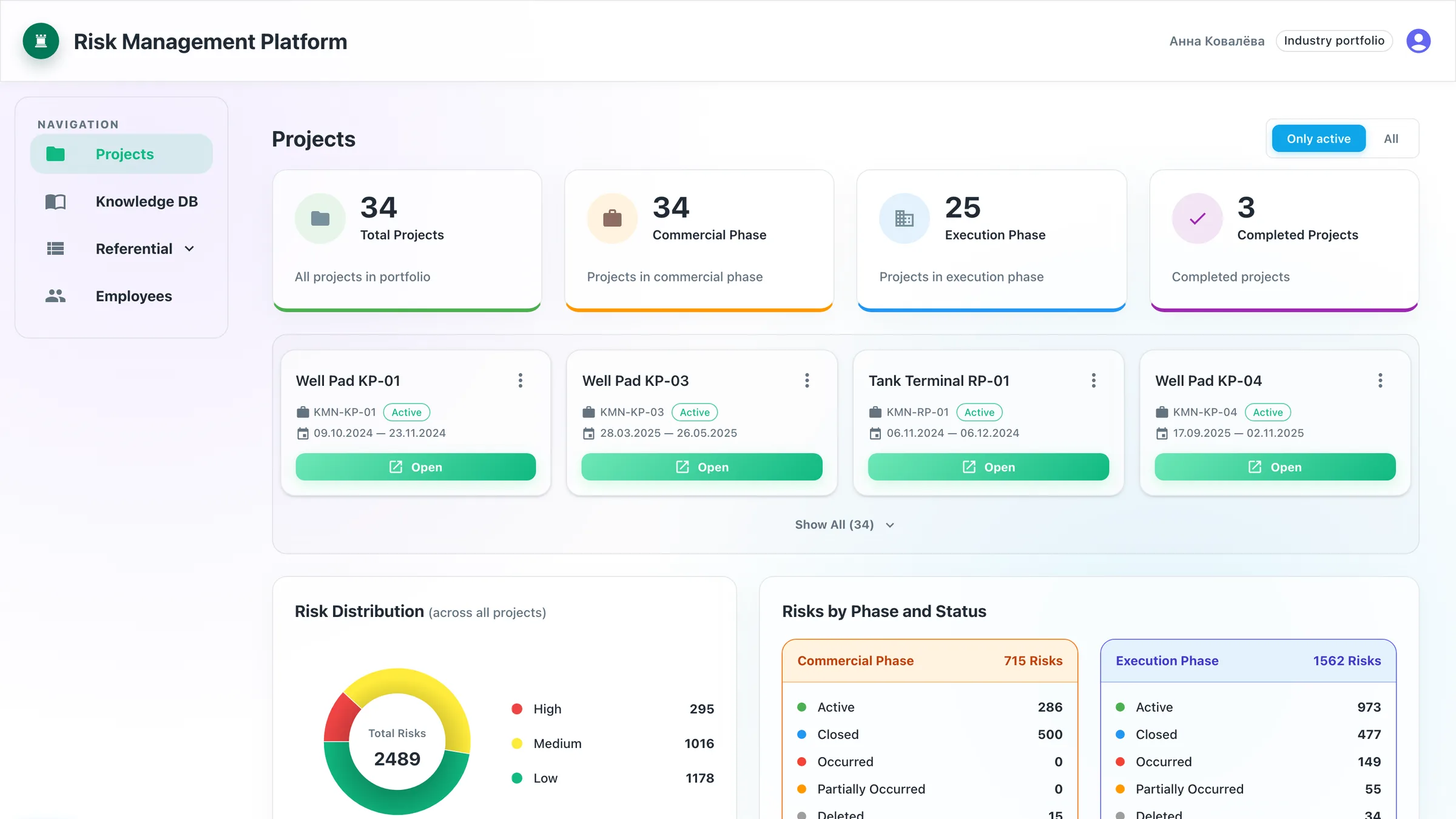
Project Risk Management
What risks does a project team face?
A risk is an uncertain event or condition that can impact project objectives. Impacts can be negative (threats, such as construction delays) or positive (opportunities, such as shortening schedules or reducing procurement costs).
For example, a supplier might delay key equipment delivery. While this remains a probability, the team determines when the delay becomes critical for installation, how much it could cost, and whether alternative scheduling mitigates the risk. If the event occurs, actual consequences are benchmarked against the baseline.
Risk · EX-014
Critical equipment delivery delay
- 1
Potential Event
Supplier may delay delivery of critical equipment
- 2
Assessment
Determine when the delay impacts installation and quantify cost exposure
Probability
55 %
Schedule
+ 30 days
Cost exposure
up to $75,000
- 3
Decision
Alternative work sequence, assigned owner and deadline
MO M. Orlova by Oct 15 Plan approved - 4
Actual Impact
Actual delay and cost tracked against initial baseline
Estimate30 daysActual21 days
Capital Projects
We focus on capital projects: industrial facilities, plant expansions, revamps, and large infrastructure. Each operates under rigorous schedules, budgets, team structures, and contractual milestones.
Who Is Involved
Engineers, procurement specialists, and discipline leads spot emerging events. The risk owner manages the assessment and mitigation actions. The risk manager upholds enterprise methodology and oversees periodic reviews. The project manager decides which interventions take priority now.
- 01
Engineers, procurement & discipline leads
Identify potential risk events early
- 02
Risk owner
Accountable for assessment and mitigation plan
- 03
Risk manager
Applies shared methodology, builds the complete picture
- 04
Project manager & executive leadership
Make decisions within delegated authority limits
Issues escalate to the level where they can be resolved
Risk Management Platform
From potential events to clear, defensible decisions
In RMP, project teams maintain risk and opportunity registers, evaluate them under consistent corporate rules, assign mitigation actions, and iterate as circumstances evolve. Executive leadership receives an audit-ready overview with rationale for decisions and contingency reserve calculations.
- 1 Compare projects across portfolios using standardized evaluation rules
- 2 Every material risk features an assigned owner, agreed strategy, and target completion date
- 3 Contingency reserves backed by probabilistic outcome modeling
- 4 Complete revision audit trail explaining why risk exposure shifted
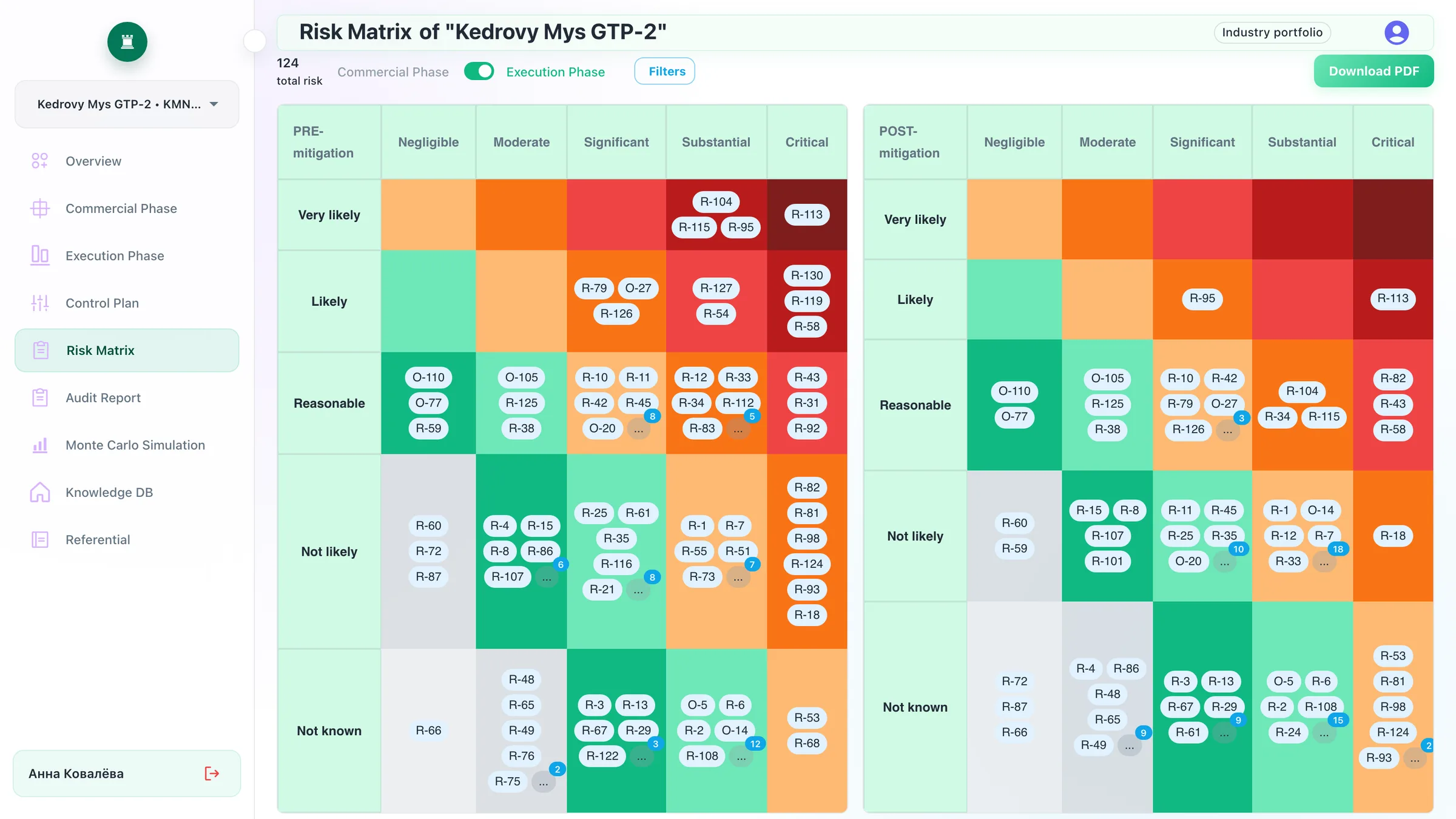
Pilot
Start with a pilot project
We configure RMP to match your corporate methodology and IT environment, migrate your existing registers, and demonstrate platform value on a live project risk management workflow.
The functional scope and rollout stages are tailored to your company's processes, governance standards, and IT infrastructure.
- 1
Methodology and IT landscape
- 2
Your current register
- 3
A real risk process
- sales@mextech.pro
- Telegram
- Message us on Telegram
Request a demonstration
We will demonstrate RMP capabilities using a realistic project environment and discuss your organization's specific requirements.